
English
Views: 0 Author: Site Editor Publish Time: 2025-06-19 Origin: Site


In industries where moisture control is critical, such as pharmaceuticals and food processing, maintaining precise humidity levels is paramount. Uncontrolled moisture can lead to product degradation, contamination, and costly production delays.
Before diving into applications, it's important to understand how desiccant dehumidifiers work. Unlike conventional refrigerant-based dehumidifiers that cool air to condense moisture, desiccant dehumidifiers use a hygroscopic material—commonly silica gel or activated alumina—that absorbs moisture from the air. The moisture-laden desiccant is then regenerated using heat, releasing the water vapor outside the system.
This process allows desiccant dehumidifiers to operate effectively at low temperatures and in environments requiring very low humidity levels, where refrigerant-based systems may struggle.
Pharmaceutical manufacturing and storage demand stringent humidity control for several reasons:
Stability and Shelf Life: Many active pharmaceutical ingredients (APIs) and excipients are hygroscopic and can degrade or clump in high humidity, affecting drug efficacy.
Quality Compliance: Regulatory bodies like the FDA mandate precise environmental conditions to ensure product safety and consistency.
Preventing Microbial Growth: Excess moisture can promote mold and bacterial contamination, threatening product purity.
Equipment Protection: Moisture can cause corrosion or damage to sensitive manufacturing and packaging equipment.
Pharmaceutical production often takes place in highly controlled cleanroom settings where maintaining strict environmental parameters is essential. Humidity control, particularly, plays a vital role in ensuring product consistency and preventing contamination. In many cases, relative humidity levels need to be maintained below 30% to inhibit moisture-sensitive chemical reactions and avoid aggregation of powder materials.
Desiccant dehumidifiers are uniquely suited to these environments because they can consistently reduce humidity to very low levels regardless of temperature fluctuations. This capability ensures that critical manufacturing processes — such as tablet pressing, granulation, coating, and capsule filling — occur under stable conditions. For example, moisture interference during tablet compression can cause capping or lamination, which affects the tablet’s mechanical strength and dosage accuracy. Similarly, in granulation, excess humidity can alter particle size and flow properties, impacting the quality and uniformity of the final product.
By providing clean, dry air, desiccant dehumidifiers not only protect product integrity but also contribute to compliance with Good Manufacturing Practice (GMP) guidelines, which often specify strict humidity limits for manufacturing zones. Furthermore, these dehumidifiers help prevent microbial growth on surfaces and in the air, reducing the risk of contamination in sterile and non-sterile production lines.
Active pharmaceutical ingredients (APIs) and raw materials are often hygroscopic—meaning they readily absorb moisture from the environment. Exposure to high humidity can lead to chemical degradation, reduced potency, and changes in physical properties such as caking or clumping. Such deterioration affects not only the efficacy of the medicine but also complicates downstream processing and quality control.
Maintaining low humidity levels in storage facilities is therefore essential. Desiccant dehumidifiers excel in this role by maintaining precise control over moisture levels in warehouses and storage rooms, even in climates with high ambient humidity or fluctuating temperatures. Their ability to operate efficiently at low temperatures without loss of drying capacity is particularly beneficial for storage conditions that require refrigeration.
This moisture control extends the shelf life of sensitive materials, ensures batch-to-batch consistency, and reduces waste due to spoilage. In addition, stable storage environments simplify compliance with regulatory standards, such as the International Council for Harmonisation (ICH) guidelines on stability testing, which mandate strict control of temperature and humidity for pharmaceutical storage.
The final stages of pharmaceutical production—packaging and filling—are critically sensitive to humidity levels. Moisture can condense inside packaging materials like blister packs, bottles, and cartons, causing seal failures, product degradation, and increased risk of microbial contamination.
Desiccant dehumidifiers help maintain dry air in these areas, reducing condensation and ensuring packaging integrity. By lowering humidity, these systems prevent the adhesion of moisture that might weaken seals or cause blister packs to deform, which is particularly important for moisture-sensitive formulations such as powders, capsules, and freeze-dried products.
Furthermore, reducing humidity in filling rooms improves worker safety and equipment longevity. Moisture can cause corrosion and electrical issues in filling machines, leading to costly downtime. Desiccant dehumidifiers mitigate these risks by creating stable, dry environments that enhance both product quality and operational efficiency.
Because packaging areas often have high personnel traffic and equipment heat loads, the ability of desiccant dehumidifiers to maintain consistent low humidity despite these variables is invaluable. Their integration into HVAC systems allows precise humidity control without disrupting the cleanroom airflows necessary for contamination control.
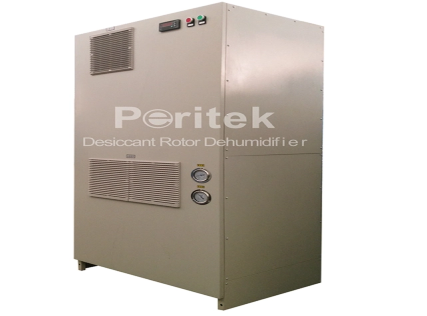
Food processing industries face similar challenges when it comes to moisture management:
Product Quality: Moisture affects texture, flavor, and shelf life of many food products.
Safety: High humidity promotes microbial growth, posing food safety risks.
Operational Efficiency: Excess moisture can cause clogging, corrosion, or malfunction of machinery.
Energy Savings: Proper humidity control reduces the need for excessive refrigeration or drying processes.
Desiccant dehumidifiers play a vital role in drying fruits, vegetables, herbs, and spices by creating low humidity environments that accelerate moisture removal without using high temperatures that could degrade product quality.
Dry storage is essential to prevent mold growth and spoilage, especially for products like grains, nuts, and baked goods. Desiccant dehumidifiers maintain optimal moisture levels, extending shelf life and reducing waste.
Moisture can affect packaging materials and seals, leading to compromised product integrity. Desiccant dehumidifiers ensure that filling and packaging rooms maintain the dry conditions necessary for safe, long-lasting packaging.
Traditional refrigeration can lead to condensation and frost buildup. Integrating desiccant dehumidifiers in cold storage reduces these issues, protecting sensitive food products and improving energy efficiency by reducing defrost cycles.
Low Temperature Performance: Effective in environments below 15°C where refrigerant dehumidifiers falter.
Ability to Achieve Very Low Humidity: Crucial for pharmaceuticals and certain food products.
Chemical-Free Operation: No need for refrigerants or chemicals, making them environmentally friendly.
Continuous Operation: Ideal for 24/7 manufacturing and storage facilities.
Compact and Customizable: Can be designed to fit specific facility requirements.
To maximize the benefits, companies should evaluate:
Capacity and Size: Based on the volume and humidity load of the space.
Regeneration Method: Commonly heat-driven; options include electric heaters or waste heat integration.
Control Systems: For precise humidity setpoint management and remote monitoring.
Maintenance Requirements: Ease of filter replacement and desiccant longevity.
Energy Efficiency: Advanced models incorporate heat recovery or solar-assisted regeneration for reduced operating costs.
In the pharmaceutical and food processing industries, precise humidity control is non-negotiable for maintaining product quality, safety, and operational efficiency. Desiccant dehumidifier provide an effective solution that meets these stringent requirements, outperforming conventional methods especially in low-temperature or ultra-low humidity scenarios.
For companies seeking reliable, industry-specific dehumidification solutions, understanding the right technology and its applications is crucial. Those interested in exploring advanced desiccant dehumidification equipment tailored to pharmaceutical and food processing needs may consider learning more about the offerings from Yangzhou Peritech Dehumidifying Equipment Co., Ltd. Their expertise in this field helps businesses maintain optimal environmental conditions critical for success.


