
English
Views: 0 Author: Site Editor Publish Time: 2026-07-23 Origin: Site


Moisture is the invisible enemy in lithium-ion battery manufacturing. Even trace amounts of water vapor trigger catastrophic side reactions during cell assembly. Excessive humidity accelerates electrolyte degradation rapidly. This leads to severe yield loss and heightens thermal runaway risks. Manufacturers traditionally rely on massive dry rooms to control these variables. However, these sprawling spaces consume enormous amounts of energy. Today, localized micro-environments offer a highly efficient alternative. They work perfectly for specific high-risk processes, cost control initiatives, and R&D applications.
In this guide, you will learn how to evaluate localized moisture control technologies. We provide a straightforward, technical framework to help you match equipment to your production scale. You will discover the best strategies for managing target dew points and process complexities. This ensures you can maintain strict environmental control without compromising operator safety or production throughput.
Energy loads define the operational reality of battery manufacturing. You must understand the vast difference between conditioning a massive room and an isolated box. A standard dry room operates like a giant environmental chamber. It continuously chills and dehumidifies thousands of cubic meters of air. This demands a massive, 24/7 energy draw from your facility HVAC system. In contrast, an isolated micro-environment targets only the active workspace. You condition a fraction of the volume. This targeted efficiency slashes baseline energy consumption drastically.
Process isolation becomes non-negotiable under certain chemical conditions. You cannot rely on bulk open space when handling highly toxic materials like sulfide solid-state electrolytes. These materials release hazardous hydrogen sulfide gas upon contact with ambient moisture. Concentrated moisture sensitivity requires absolute isolation. A localized chamber provides the physical barrier necessary to protect both the material and your operators.
Many modern facilities deploy hybrid approaches to balance safety and utility loads. They do not force the entire room to an extreme -60°C dew point. Instead, they layer their protection:
This hybrid strategy prevents the exponential energy costs associated with pushing large spaces to ultra-low humidity levels.
Table: Core Differences Between Dry Rooms and Localized Micro-Environments
| Evaluation Metric | Full-Scale Dry Room | Localized Glove Box Environment |
|---|---|---|
| Energy Load | Extremely high (continuous massive air volume conditioning) | Highly efficient (targeted micro-volume conditioning) |
| Process Isolation | Low (open space, cross-contamination risks) | Absolute (physical barrier protects operators and materials) |
| Capital Expenditure | Massive (facility-level structural and HVAC modifications) | Moderate (equipment-level procurement and installation) |
| Best Application | High-volume automated cell assembly lines | R&D, toxic material handling, targeted injection processes |
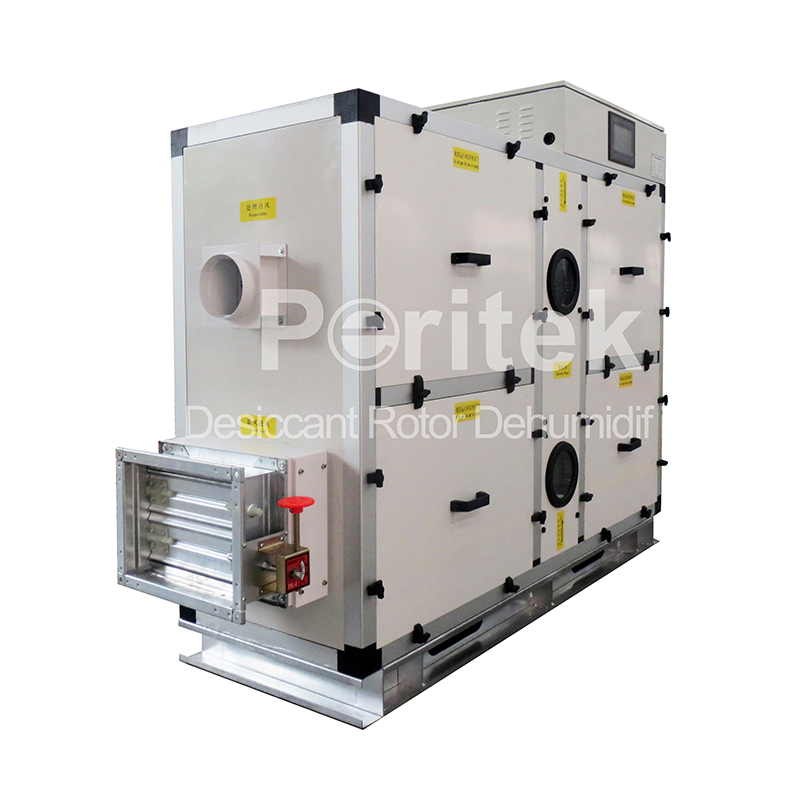
Choosing the right dehumidification technology dictates your process stability. You must align the mechanical mechanism with your specific production behavior. The industry generally relies on three distinct technological pathways.
Open-loop purge systems represent the simplest moisture control method. These systems rely on a continuous flow of dry inert gas, usually Argon or Nitrogen. The gas flows in, pushes ambient moisture out, and vents into the exhaust. We recommend open-loop systems for small-scale operations or infrequent laboratory use. They also excel during processes generating heavy solvent loads where recirculating the gas becomes dangerous. However, you must watch out for the hidden operational burdens. Open-loop systems consume vast quantities of expensive bottled gas.
Closed-loop gas purification systems serve as the industrial standard. Instead of venting expensive gas, they recirculate it. The gas passes through dedicated drying beds containing molecular sieves and copper catalysts. When evaluating these systems, you must assess them against three strict criteria:
High-throughput manufacturing environments often demand a different approach. Materials constantly enter and exit the workspace. Operators open transfer antechambers frequently. This behavior requires rapid moisture recovery. Here, integrating a fresh air dehumidification system makes practical sense. These systems provide continuous air replacement. They strip moisture from incoming facility air rapidly. They allow high-volume operations without depleting expensive inert gas reservoirs.
Marketing brochures often highlight absolute minimum temperatures. However, "achieves -60°C" means very little in a practical setting. You need a low dew point glove box that maintains stability during active operation. Sustained dew point stability matters most. Gloves act like moisture pumps. Every time an operator plunges their arms into the chamber, they displace gas and introduce micro-leaks. Material transfer cycles through the antechamber introduce ambient air. You must evaluate the system based on its ability to hold -40°C or better while operators actively perform tasks.
Structural integrity dictates the dehumidifier workload. The ISO 10648-2 standard provides a rigid framework for evaluating enclosure leak rates. A poorly sealed box forces the dehumidifier to work continuously. You must inspect the frame welding quality. Evaluate the window materials carefully. Polycarbonate panels flex more than tempered glass under pressure changes. This flexing strains the peripheral seals over time. A Class 1 leak rate certification ensures your environmental control unit focuses on process moisture rather than fighting ambient facility leaks.
Moisture sensors fail silently over time. Sensor reliability and drift pose significant risks to your product quality. Phosphoric acid and aluminum oxide probes degrade when exposed to certain chemical vapors. You must address this reality proactively. Ensure the probes remain easily accessible for routine calibration. We highly recommend specifying an industrial glove box dryer with dual-sensor setups. Redundancy prevents single-point failures. If one sensor drifts, the secondary sensor flags the discrepancy immediately. This keeps your process safely within tolerance.
You cannot deploy a generic environmental chamber for every battery manufacturing step. Different processes generate unique byproducts. You must tailor your glove box dehumidifier to the specific chemical reality of the task at hand.
Powder mixing and extrusion generate intense airborne particulates. Cathode active materials and solid-state powders become highly mobile inside a confined space. If these particulates reach the dehumidifier, they clog the moisture filters instantly. This chokes the blower and ruins the molecular sieves. You must integrate specialized HEPA filtration upstream of the drying loop. Twin-screw extrusion environments, in particular, require aggressive particulate management to keep the gas purification system alive.
Solvent management dominates the cell finishing stages. During battery electrolyte injection, highly volatile solvents evaporate into the chamber atmosphere. Chemicals like Diethyl carbonate (DEC) and Dimethyl carbonate (DMC) wreak havoc on standard environmental controls. They coat the molecular sieves. They blind the moisture probes. They react unpredictably with trace water. You cannot route these vapors directly into a standard purification loop. You must specify inline solvent traps or activated carbon VOC-specific filtration prior to the dehumidification bed.
Lithium metal handling introduces the strictest atmospheric demands. Metallic lithium reacts violently with water. More importantly, it reacts with Nitrogen gas to form lithium nitride at room temperature. You cannot use standard Nitrogen environments here. You must handle lithium metal exclusively in purified Argon environments. Your chosen system must eliminate both H2O and N2 completely. This requires specialized getter materials and extremely rigorous leak-checking protocols.
Integrating complex atmospheric control requires careful facility planning. Many manufacturers focus entirely on the core unit and overlook the implementation risks. Regeneration downtime represents the largest threat to production scheduling. Molecular sieves eventually saturate with moisture. They require a thermal regeneration cycle to boil off the trapped water. This process involves heating the beds to over 200°C while purging them with forming gas. It takes significant time. If you use a single-column system, your production stops entirely during this cycle. We advise evaluating dual-column systems. A dual-column design allows one bed to operate actively while the second bed regenerates offline. This guarantees continuous production.
Consumables and maintenance schedules dictate long-term equipment viability. You need a transparent understanding of component lifespans. Molecular sieves degrade naturally over several years of thermal cycling. Vacuum pumps require strict oil change intervals to prevent mechanical failure. Butyl gloves suffer from pinhole leaks and chemical degradation. You must establish a rigid preventative maintenance schedule. Ignoring these replacements guarantees sudden process deviations.
Facility utility requirements often catch buyers by surprise. High-capacity blowers generate immense friction heat. Recirculating this hot gas ruins the internal chamber temperature. You must provide reliable chilled water connections to cool the gas before it returns to the workspace. Furthermore, regeneration cycles produce hazardous, moisture-laden off-gas. You need dedicated exhaust routing to vent this safely outside the facility. Finally, stable power supplies remain critical. Voltage drops can reset programmable logic controllers, shutting down circulation pumps and exposing active materials to ambient air.
Selecting the right localized moisture control solution requires a clear, logical progression. You must build your decision matrix systematically. First, determine your scale. R&D labs need different capacities than pilot production lines. Next, analyze your process chemistry. Powder handling demands HEPA filtration, while electrolyte injection requires aggressive VOC trapping. Then, lock in your dynamic dew point requirement. Finally, align these technical necessities with your available budget.
Before initiating procurement, demand empirical data from your vendors. Do not accept baseline specifications measured in an empty, static chamber. Ask for verifiable recovery times following simulated material transfers. Request case studies demonstrating sensor stability in environments matching your specific solvent loads. Taking these proactive steps ensures your equipment delivers consistent, safe, and reliable atmospheric control.
A: Acceptable dew points typically range from -40°C to -60°C. Standard liquid electrolyte filling usually requires -40°C. However, advanced chemistries, solid-state materials, and lithium metal handling demand strictly controlled -60°C to -70°C environments to prevent severe degradation and dangerous side reactions.
A: Regeneration frequency depends entirely on usage habits. A properly sealed system in a laboratory might need regeneration every 3 to 6 months. High-throughput production environments with frequent material transfers may require regeneration every 2 to 4 weeks. Dual-column systems manage this without stopping operations.
A: Retrofitting is possible but challenging. You must ensure the existing port sizes can handle increased gas flow without causing disruptive turbulence. You must also verify blower compatibility and ensure the older enclosure meets strict ISO 10648-2 leak rate standards before attaching a high-capacity dryer.


