
English
Views: 0 Author: Site Editor Publish Time: 2026-08-09 Origin: Site


Steel bridges face a relentless enemy in harsh environmental exposure. Traditional anti-corrosion methods rely heavily on specialized paints. However, these passive protective coatings eventually fail. Constant micro-fractures, harsh temperature cycling, and unrelenting UV exposure break them down over time. Active climate control offers the only empirically verifiable solution. It actively halts oxidation inside enclosed bridge structures. You can stop the electrochemical process of corrosion entirely. You just need to drop the ambient relative humidity below a specific, calculated threshold. This article serves as a comprehensive technical evaluation guide. Engineers, planners, and infrastructure managers will learn how to assess these systems accurately. We will cover how to specify and implement advanced structural dehumidification technology. You will discover the inherent limits of passive barriers. We also detail critical application zones, equipment sizing factors, and essential procurement priorities.
Relying solely on paint and sealants represents an incomplete strategy. A physical barrier seems highly logical at first glance. However, bridges are dynamic structures. They vibrate from traffic loads. They expand and contract constantly. This structural flexing causes physical coatings to degrade. Micro-cracking inevitably occurs across the painted surfaces. These microscopic gaps allow moisture to penetrate deeply. Chlorides from road salt also enter these fissures. Dampness becomes permanently trapped against the bare steel. This hidden moisture accelerates severe structural decay. You cannot easily inspect these trapped pockets of rust.
Engineers study the corrosion curve to combat this decay. The science is straightforward. Corrosion requires three elements: an anode, a cathode, and an electrolyte. Water acts as the electrolyte in bridge rust. Removing this electrolyte from the air proves highly effective. You extract water vapor directly from the environment. This method offers a much more predictable approach to structural corrosion prevention. Trying to maintain a flawless physical barrier over thousands of square meters is practically impossible. Dry air guarantees protection even if the internal paint flakes off.
Infrastructure managers must evaluate lifecycle cost shifts. Consider the recurring expenses of continuous repainting. Abrasive blasting requires massive containment structures. It demands immense manual labor. It also triggers environmental compliance issues. We contrast these heavy labor costs against automated climate control systems. Running a dehumidification unit requires predictable operational expenditure (OPEX). The system draws power, but it eliminates the need for endless repainting cycles. You trade unpredictable, labor-intensive maintenance for stable, automated climate control.
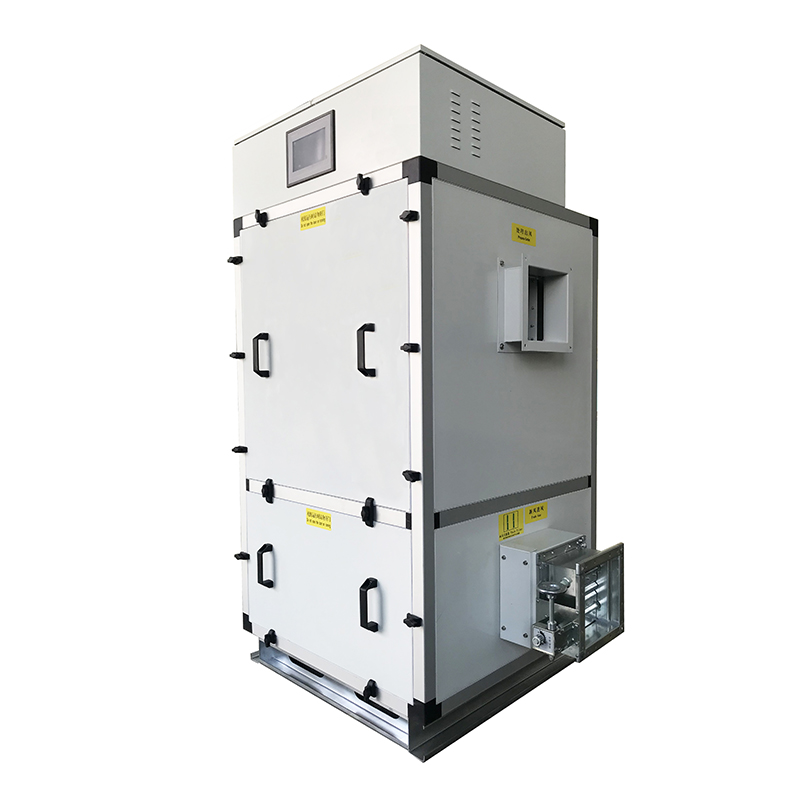
Refrigerant cooling units fail in harsh infrastructure applications. Condensation coils freeze rapidly in sub-zero temperatures. Desiccant rotors offer a vastly superior alternative. They absorb moisture using a chemical attractant. Manufacturers typically use highly porous silica gel. This desiccant material extracts moisture effectively. It works flawlessly even in freezing, damp coastal conditions. The silica gel does not freeze. It chemically binds the water molecules from the passing airstream. A separate heated airstream then bakes the moisture out of the rotor. This continuous rotation ensures non-stop drying capability.
Delivery mechanisms rely on closed-loop or slight-positive-pressure designs. The bridge dehumidifier takes in ambient air. It removes the water vapor efficiently. It then forces the resulting dry air into the structure. The system displaces humid air outward. This humid air escapes through specialized, calibrated exhaust valves. You essentially purge the internal void continuously. Maintaining positive pressure ensures external humid air cannot leak inward. The dry air acts as an invisible, pressurized shield.
Modern units integrate advanced sensors and automation. They do not run blindly at full capacity. Installers place hygrostats at the furthest exhaust points. These sensors measure the exact moisture level leaving the bridge. They ensure the entire span reaches the strict target. Engineers typically aim for less than 40% relative humidity. Good systems dynamically adjust their power draw. They base these constant adjustments on real-time weather data. If the external air becomes drier, the machine powers down. This automation saves tremendous amounts of electrical energy.
Main cables bear the heaviest structural loads on a suspension bridge. These cables consist of thousands of individual high-tension steel wires. Ensuring proper bridge cable humidity control is incredibly complex. Water easily seeps between the bundled wires. Crews solve this by wrapping the entire cable. They apply an airtight elastomeric wrap around the exterior. They then inject dry air directly at the cable saddles. High-pressure fans force this dry air down the entire cable length. The air travels through the tiny voids between the wires. This continuous flow protects the high-tension steel from catastrophic internal corrosion.
Bridge decks feature vast, cavernous internal volumes. Steel bridge dehumidification requires precision inside these areas. You must maintain a slight overpressure inside the box girders. This pressure prevents moist ambient air from infiltrating. Welds and joints are rarely perfectly sealed. Salty coastal air attempts to enter through inevitable microscopic structural leaks. The internal positive pressure pushes back against the outside atmosphere. It effectively blocks the entry of corrosive elements.
Anchorages represent the dampest load-bearing areas of the bridge. They sit deep underground or inside massive concrete blocks. Many are located directly near the water line. These dark chambers trap cold, damp air constantly. Localized climate control prevents the catastrophic failure of these zones. You must protect the critical cable anchor points at all costs. If an anchorage rusts, the entire bridge loses its structural integrity. Dedicated dehumidifiers keep these concrete caverns bone-dry.
| Application Zone | Primary Risk Factor | Typical Airflow Strategy |
|---|---|---|
| Suspension Cables | Trapped water between high-tension wire bundles | High-pressure injection at saddles, forced linear flow |
| Box Girders | Micro-leaks allowing salty air infiltration | Low-pressure, high-volume displacement with positive pressure |
| Anchorages | Underground dampness and concrete moisture retention | Localized, closed-loop continuous air recirculation |
You must calculate system requirements accurately. Total bridge volume is only one metric. Air replacement rates matter significantly more. You also need to determine the specific leakage rate of the enclosure. Engineers conduct pressure tests to measure this exact leakage. A proper desiccant dehumidifier for bridges matches these complex variables perfectly. If you undersize the unit, the distant ends of the bridge remain damp. If you oversize it, you waste valuable electrical power.
Evaluate different systems based on rotor efficiency. Check their internal heat recovery mechanisms carefully. The system must heat the reactivation air to bake moisture out of the rotor. This heating process drives the primary operating cost. High thermal efficiency reduces this recurring expense drastically. Modern units recapture exhaust heat to pre-heat incoming air. This smart recovery drops the energy footprint significantly.
Specify marine-grade construction strictly. You cannot install standard commercial units on a coastal bridge. Demand 316L stainless steel for all external panels. Look for a customized, heavily robust casing. Specialized filtration is also strictly required. The filters protect the sensitive desiccant rotor. They block marine salt, diesel soot, and traffic particulates. If salt coats the rotor, it loses its chemical ability to absorb water.
Viable systems must integrate with central management software. Remote monitoring is entirely mandatory. Evaluators must prioritize SCADA (Supervisory Control and Data Acquisition) compatibility. Below is a list of critical evaluation criteria for control systems.
No machine can overcome a poorly sealed structure. Significant pre-work is strictly required. Crews must seal heavy access hatches and cable entry points perfectly. They must secure expansion joints before system commissioning. This physical sealing is the absolute foundation of active bridge corrosion control. You cannot dry the outside atmosphere. If your box girder leaks excessively, the dehumidifier will run endlessly. Engineers often use smoke testing to find and seal hidden gaps. You must treat the bridge deck like a submarine hull.
Moving air across thousands of feet creates severe engineering challenges. Ducting experiences significant pressure drops over long distances. Airflow loses momentum due to friction against internal steel plates. You cannot push air two miles with a single fan. Strategically placed booster fans solve this complex issue. Engineers install these fans inside the girders. They pick up the dry air and push it further down the line.
Ongoing maintenance carries serious blindspots. Filter replacements remain absolutely critical to survival. Salt can easily bypass a neglected, clogged filter. This salt will degrade the silica gel rotor rapidly. This contamination severely impacts overall efficiency. Maintenance crews must follow rigid inspection schedules.
Bridge managers should start by conducting a comprehensive structural leakage audit. Assess the specific air-tightness of your box girders and anchorages. Next, implement a localized pilot test. Install a small unit in one specific anchorage chamber. Measure the exact energy draw and moisture extraction rate. Use this precise data before scaling to whole-span ducting networks. Finally, consult with a structural moisture control specialist. They will provide a detailed environmental audit. They will also assist with preliminary equipment sizing to ensure engineering accuracy.
A: Empirical data shows that corrosion virtually halts when relative humidity drops below 45%. However, most engineering specifications target a strict 35–40% RH. This lower setpoint provides a crucial safety margin. It protects the steel against sudden, extreme temperature drops that could otherwise cause flash condensation.
A: No. They are entirely complementary systems. Specialized coatings protect the exterior exposed steel from rain and direct weather. Dehumidification protects the inaccessible internal voids. It safeguards box girders and suspension cables where continuous repainting is physically impossible or financially prohibitive.
A: Modern systems are highly efficient. They use variable frequency drives (VFDs) to modulate fan speeds based on real-time RH feedback. The initial dry-out phase requires moderate energy. Once the internal environment stabilizes, maintaining the target RH requires significantly less power.
A: A high-quality silica gel rotor typically lasts 8 to 10 years or more. This lifespan assumes the pre-filtration system is rigorously maintained. You must actively prevent marine salt, diesel exhaust, and hydrocarbon contamination from reaching and blinding the chemical desiccant.


