
English
Views: 0 Author: Site Editor Publish Time: 2026-08-18 Origin: Site


Operating an indoor ice arena presents immense moisture challenges. Poor humidity management brings severe operational risks to any facility. You will encounter soft ice surfaces. The building structure deteriorates rapidly. Skaters face inherently unsafe gliding conditions. Thick fog often obstructs visibility for both live spectators and television broadcasts.
Standard commercial HVAC systems fall incredibly short in these environments. They simply lack the engineering required for extreme temperature differentials. An ice rink creates a massive thermal gap. The cold ice sheet clashes constantly against the warmer ceiling air.
Effective resolution demands a highly targeted engineering approach. You must utilize dedicated low temperature systems. Controlling the dew point directly at the ice surface prevents moisture dropout. We will explore exactly how dedicated dehumidification stabilizes your arena. You will learn how to size systems properly. We will also reveal why standard air conditioning fails so predictably in these frozen environments.
Physics dictate exactly how moisture behaves inside an enclosed arena. Warm air naturally holds more water vapor. Cold air holds significantly less. When warm, humid ceiling air meets a freezing ice sheet, the air cools instantly. It loses its capacity to hold vapor. Moisture drops out of the air immediately. We call this the dew point equation. Fog forms rapidly whenever the air's dew point rises above the actual ice surface temperature. This direct thermal clash creates severe indoor ice rink condensation.
Facility managers must understand specific operational triggers. These triggers release heavy moisture loads into the building. They happen predictably during normal operations.
True ice arena fog prevention relies on strict metrics. We define success by a single, critical benchmark. Your HVAC system must suppress the indoor dew point below 25°F. It must achieve this suppression actively. It must maintain this level even during absolute peak load conditions.
Many facilities attempt to use basic mechanical cooling. They try to chill the air to remove moisture. This approach fails miserably. Standard air conditioning cannot stop ceiling drips. It cannot eliminate a foggy ice sheet. We must examine the inherent limits of mechanical cooling.
Standard systems try to cool the air below its dew point. This action forces vapor to condense into liquid on the cooling coils. This works perfectly in an office building. It fails completely inside a skating rink.
We see major coil freezing risks in ice arenas. The ambient air surrounding the ice is already quite cold. To extract moisture from this cold air, cooling coils must drop well below freezing. Water freezes at 32°F. Your coils must hit 15°F or 20°F to pull vapor out.
During these forced defrost cycles, the machine stops removing moisture entirely. It often blows warm air back into the rink to melt the frosted coils. This ruins the delicate climate balance. It softens the ice sheet.
These constant freeze-and-thaw cycles highlight severe energy inefficiency. Standard DX (direct expansion) systems waste immense electrical power. They constantly battle the low ambient temperatures of your arena. They work against their own mechanical limits. Achieving true low temperature dehumidification requires a completely different technological approach.
Engineers evaluate two primary technologies for arena climate control. You must choose between mechanical and desiccant systems. We evaluate them based on operating temperatures and structural design requirements.
When should you consider mechanical dehumidifiers? They sometimes suit warmer, seasonal rinks. They work adequately for enclosed spectator concourses. These concourses must remain physically isolated from the main ice sheet. However, they carry severe operational limitations. Their moisture-removal efficiency plunges dramatically at lower temperatures. They simply cannot reliably maintain sub-freezing dew points.
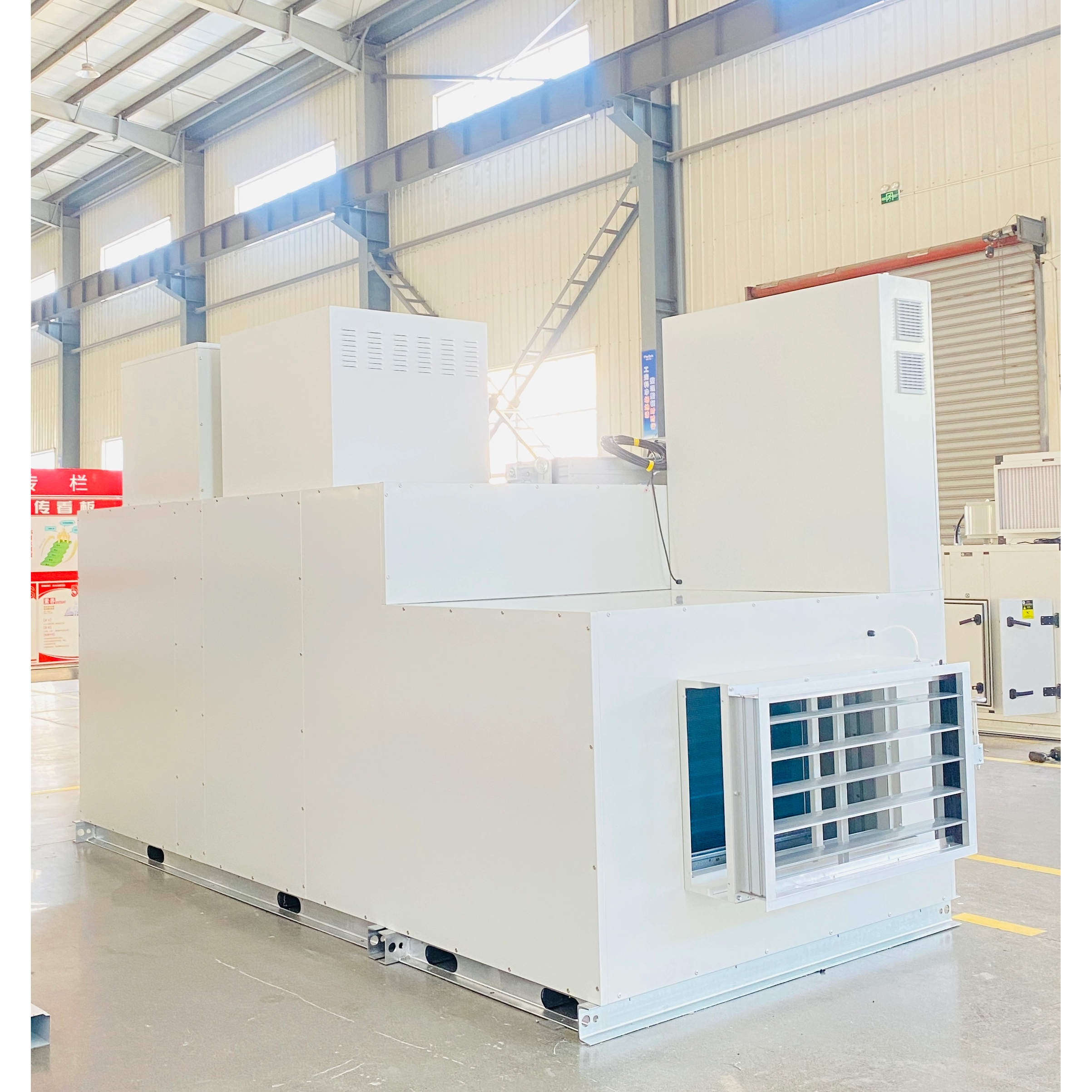
Desiccant technology serves as the undeniable industry standard. These systems utilize a completely different physical mechanism. They feature a continuously rotating silica gel wheel. This massive wheel adsorbs moisture chemically. It acts like an endless sponge. It never relies on condensation. It never requires freezing temperatures to extract vapor.
Performance thrives in extreme conditions. A desiccant unit easily achieves continuous dew points below 20°F. Frost buildup never occurs. The machine runs uninterrupted during your busiest tournaments. It extracts moisture flawlessly from freezing air.
Dehumidification Technology Comparison
| Feature | Mechanical System | Desiccant System |
|---|---|---|
| Moisture Removal Method | Cooling and condensation | Chemical adsorption via rotor |
| Low Temp Performance | Poor (plummets below 45°F) | Excellent (thrives below 32°F) |
| Coil Freezing Risk | Extremely high | None (no liquid condensation) |
| Defrost Cycles Needed | Frequent | Never required |
The engineering verdict remains incredibly clear. A professional facility demands consistent performance. A desiccant dehumidifier for ice rink applications stands as the only reliable choice. It handles year-round operations flawlessly. It dominates in climates facing high summer humidity. You avoid structural damage completely.
Proper evaluation guarantees long-term facility health. You must balance baseline loads against peak load profiling. Assess your facility's absolute worst-case scenario. Sizing must strictly align with ASHRAE standards for ice arenas. Peak crowds dictate the required capacity. Humid summer days create massive infiltration loads. A professional ice rink dehumidifier must handle these dynamic shifts instantly.
Airflow and distribution dictate your ultimate success. We prioritize a robust ducting strategy. You must strategically "blanket" the ice surface using dry air. This creates an invisible atmospheric shield against moisture. It actively prevents thermal stratification.
Dead zones pose a massive threat. Stagnant air often gathers in the ceiling trusses. Damp air gets trapped near the roof deck. This hidden moisture rots structural steel over time. Proper air sweeps eliminate these destructive pockets. Supply ducts must push dry air across the ceiling. Return ducts must pull humid air away from the ice level.
Control systems demand modern automation. Look for predictive dew point tracking. Avoid simple relative humidity (RH) sensors. RH proves highly misleading inside an arena environment. Varied temperature zones skew RH readings drastically. A 50% RH at the ceiling means something completely different than 50% RH at the ice surface. Dew point offers an absolute, undeniable metric.
Vendor evaluation criteria must remain aggressively strict. You cannot rely on basic brochures. You must demand hard data.
Integrating your dehumidification strategy with the refrigeration plant brings major operational benefits. Lowering the ambient dew point drastically reduces structural heat loads. It directly helps the ice plant chillers run less frequently. Dry air prevents latent heat transfer. When you remove moisture from the air, the ice freezes much faster. The surface remains harder. Skaters enjoy faster, safer gliding conditions.
You must evaluate reactivation energy sources carefully. The desiccant wheel needs constant drying to remain effective. We call this the reactivation process. Hot air must blow through a section of the rotor to bake the moisture out. We evaluate the most efficient methods to heat this air.
Options include direct gas firing or electric resistance. Some facilities use steam. However, the best designs capture waste heat. Many arenas recover waste heat directly from the rink's refrigeration compressors. They route this free heat into the desiccant reactivation cycle. This creates an elegant, highly efficient energy loop.
Maintenance realities dictate long-term performance. You must establish strict, uncompromising filter replacement schedules. Dirty filters choke the airflow. A well-maintained desiccant wheel boasts a massive lifespan. It typically lasts 10 to 15 years before needing replacement.
Regular sensor calibration guarantees accurate atmospheric readings. Dew point sensors require seasonal checks. Dust and cold temperatures drift their accuracy over time. Strict maintenance keeps your ice rink humidity control tight and responsive. The system runs only when needed. You protect your structural steel. You guarantee a pristine sheet of ice for every single game.
Eliminating foggy rinks involves precise engineering execution. Dripping ceiling condensation signals a complete failure in dew point management. You must control the air moisture directly above the frozen sheet.
Facility managers should firmly prioritize desiccant-based technology. Mechanical cooling simply cannot survive sub-freezing demands. Demand thorough load-calculation proofs before committing to any vendors. Protect your structural steel from rot. Protect your skaters from soft, dangerous ice.
Take immediate action today. Recommend scheduling an on-site psychrometric audit immediately. Consult an HVAC engineer specializing in extreme cold environments. Establish your absolute baseline loads before requesting equipment bids. Precision planning guarantees permanent results.
A: Shift your focus away from Relative Humidity (RH). RH is highly misleading in varied temperature zones. The crucial metric is the Dew Point. The ideal indoor dew point generally sits between 20°F and 25°F. This keeps moisture strictly below the ice surface temperature, preventing fog and ceiling drips completely.
A: By actively removing moisture from the air, it stops latent heat from transferring into the ice sheet. This dramatically reduces the runtime of your costly refrigeration plant. Furthermore, advanced desiccant systems often recover waste heat from those very chillers to regenerate the silica wheel, creating a highly efficient loop.
A: No. Relying purely on outside air ventilation usually guarantees failure. During warmer or humid months, bringing outside air indoors actually worsens the condensation problem. It introduces a massive new latent moisture load to the rink. Dedicated, active dehumidification remains absolutely required to maintain a safe environment.


