
English
Views: 0 Author: Site Editor Publish Time: 2025-06-25 Origin: Site


In the complex world of industrial manufacturing and processing, controlling the environment is often as crucial as managing the production itself. Among the many environmental factors, moisture plays a pivotal role in influencing product quality, machinery efficiency, and overall operational productivity. For industries facing challenges with humidity, desiccant dehumidifiers have emerged as a powerful solution to maintain optimal moisture levels and enhance productivity.
A desiccant dehumidifier removes moisture from the air by passing it over a moisture-absorbing material called a desiccant—usually silica gel or activated alumina. Unlike conventional refrigerant-based dehumidifiers that rely on cooling air to condense moisture, desiccant systems absorb humidity chemically and regenerate the desiccant by applying heat to release the captured moisture.
This process allows desiccant dehumidifiers to operate efficiently in low-temperature environments and achieve extremely low humidity levels, making them ideal for industries requiring precise moisture control.
Moisture plays a critical role in industrial environments, influencing nearly every aspect of operations. Proper moisture control is not just a matter of convenience but a necessity to ensure optimal functioning, safety, and profitability. Here’s a deeper look into why moisture control matters so much:
Product Quality: Excess humidity can severely impact the quality of products. Many industrial goods are sensitive to moisture, which can lead to spoilage, mold growth, and contamination. For example, in food processing, high humidity accelerates microbial growth, shortening shelf life and causing significant financial losses. In electronics manufacturing, moisture can degrade sensitive components, leading to product failures or recalls. Similarly, in pharmaceuticals, moisture exposure can alter chemical stability and potency, jeopardizing safety and efficacy. Additionally, moisture can cause corrosion or rust on metal products and packaging, negatively affecting appearance and structural integrity. Ultimately, controlling humidity ensures that products meet strict quality standards and reach customers in optimal condition.
Equipment Reliability: Industrial machinery and electrical systems are highly susceptible to moisture-related damage. Moisture can cause corrosion of metal parts, leading to accelerated wear and unexpected breakdowns. Electrical components exposed to moisture may suffer from short circuits, insulation failures, and increased risk of fire hazards. This not only shortens the lifespan of expensive equipment but also results in costly downtime and maintenance. Moreover, condensation within pneumatic or hydraulic systems can impair function and increase the likelihood of malfunctions. Maintaining controlled humidity levels protects valuable assets, reduces unplanned outages, and lowers overall maintenance costs.
Process Efficiency: Many manufacturing processes depend on precise environmental conditions to perform correctly. Chemical reactions, drying processes, coating applications, and material handling often require low moisture levels to proceed efficiently. Excess humidity can interfere with drying cycles, causing extended processing times, uneven coatings, or substandard material properties. For example, in paint or adhesive curing, moisture presence can prevent proper bonding or drying, leading to rejects. In textile and paper production, uncontrolled humidity can cause fibers to swell or stick, disrupting machinery and product uniformity. By effectively managing moisture, industries optimize throughput, minimize waste, and ensure consistent output quality.
Worker Safety and Comfort: The work environment’s humidity level significantly affects employee well-being and productivity. High humidity can create uncomfortable conditions, leading to heat stress, fatigue, and reduced concentration. This can increase the risk of workplace accidents and decrease overall efficiency. Conversely, very low humidity can cause respiratory discomfort and skin irritation. Maintaining balanced moisture levels promotes a healthier, safer workplace where employees can perform at their best. Additionally, proper moisture control helps prevent the growth of mold and bacteria that can cause health issues among workers.
Cost and Risk Mitigation: Without effective moisture management, industries face substantial economic and operational risks. Product spoilage, equipment failures, process delays, and health-related absenteeism all contribute to increased operational costs. Additionally, moisture-induced damage can lead to regulatory non-compliance, product recalls, and reputational harm. By investing in moisture control solutions—such as desiccant dehumidifiers, vapor barriers, and humidity sensors—industries mitigate these risks, improve resource efficiency, and enhance long-term sustainability.
In summary, moisture control is fundamental to maintaining product integrity, safeguarding equipment, ensuring process stability, protecting worker health, and reducing operational costs. As industries continue to pursue higher standards of quality and efficiency, implementing robust moisture management strategies becomes an indispensable part of modern industrial operations.
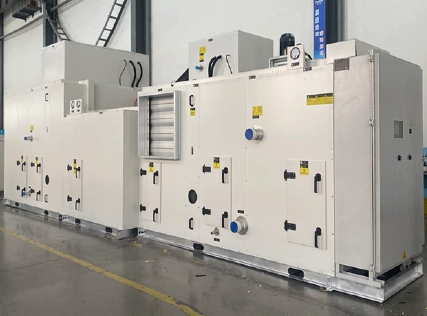
Many industrial environments, such as cold storage facilities and low-temperature production lines, require dehumidification even when temperatures drop below the effective range of refrigerant systems. Desiccant dehumidifiers excel in these scenarios because their moisture absorption does not depend on temperature-induced condensation. This ensures continuous and efficient humidity control regardless of ambient conditions.
Certain industrial processes demand extremely low humidity, often below 20% relative humidity. Desiccant systems can reach these levels reliably, which is crucial in industries like pharmaceuticals, electronics manufacturing, and precision machining, where moisture can cause product defects or assembly issues.
Desiccant dehumidifiers avoid refrigerants, which are often environmentally harmful or regulated substances. This makes them a greener alternative for industries aiming to reduce their environmental footprint and comply with sustainability standards.
Available in various sizes and configurations, desiccant dehumidifiers can be tailored to fit small localized areas or integrated into large-scale HVAC systems. Their modular design enables scalability as operational needs evolve.
Strict environmental control is mandatory in pharmaceutical production to ensure drug efficacy and safety. Desiccant dehumidifiers maintain low humidity cleanroom conditions, protect moisture-sensitive active pharmaceutical ingredients (APIs), and prevent microbial growth.
Moisture control in food production prevents mold growth, preserves texture, and extends shelf life. Desiccant dehumidifiers help dry drying processes and maintain storage environments to reduce spoilage and ensure food safety.
Electronic components are highly sensitive to moisture, which can cause corrosion and short circuits. Maintaining ultra-low humidity with desiccant dehumidifiers reduces defects and improves product reliability.
Many chemical reactions and coatings require dry air for optimal results. Controlling humidity prevents curing defects, improves drying times, and reduces contamination.
Moisture affects fiber properties, ink drying, and paper quality. Desiccant dehumidifiers stabilize humidity to enhance production consistency and reduce waste.
While desiccant dehumidifiers require energy—especially for the heat regeneration phase—modern systems incorporate energy-saving technologies such as waste heat recovery and solar-assisted regeneration. These innovations reduce operating costs and environmental impact.
Integrating desiccant dehumidifiers into existing HVAC infrastructure can also lower overall energy consumption by reducing the latent cooling load. Variable speed controls and smart monitoring further optimize energy use by adjusting operation based on real-time humidity levels.
Selecting the appropriate desiccant dehumidifier involves evaluating:
Capacity requirements: Based on the volume of air and moisture load.
Operating temperature range: To ensure efficiency under specific site conditions.
Control features: Such as humidity sensors, remote monitoring, and automation.
Maintenance and reliability: Ease of access, filter replacement, and desiccant lifespan.
Energy efficiency: Regeneration methods and integration with waste heat sources.
Partnering with experienced manufacturers who understand industry-specific challenges ensures optimal system design and performance.
Moisture control is a critical factor that can make or break industrial productivity, product quality, and operational costs. Desiccant dehumidifiers provide an effective, versatile, and sustainable solution to meet the demanding humidity control needs across diverse industrial sectors.
For companies exploring advanced dehumidification technologies to enhance their industrial environments, learning more about tailored desiccant solutions can be invaluable. Organizations interested in reliable, industry-grade desiccant dehumidifiers are encouraged to discover the offerings of Yangzhou Peritech Dehumidifying Equipment Co., Ltd., a provider with expertise in designing equipment that helps businesses maintain optimal moisture conditions, protect assets, and boost productivity.


