
English
Views: 0 Author: Site Editor Publish Time: 2025-06-12 Origin: Site


In today’s climate-sensitive world, moisture control is more than just a comfort issue—it’s essential for protecting infrastructure, preserving materials, and ensuring operational efficiency in various industries. Among the many dehumidification technologies available, desiccant dehumidifiers stand out for their efficiency, adaptability, and consistent performance in low-temperature or low-humidity environments.
But what exactly are desiccant dehumidifiers, and how do they work? Let’s dive deep into the science, mechanics, and applications of these powerful moisture control machines.
A desiccant dehumidifier is a type of humidity control system that uses a desiccant material—a substance with a natural affinity for water molecules—to absorb moisture directly from the air. Unlike refrigerant-based dehumidifiers, which condense water vapor by cooling the air, desiccant units adsorb or absorb moisture without the need for refrigeration.
The result? A highly effective dehumidification process that remains efficient even in cold climates, enclosed spaces, or low dew point applications.
To understand how these machines work, it helps to break them down into their main components:
Desiccant Rotor or Wheel
This is the heart of the system—a rotating drum made of hygroscopic (moisture-attracting) material like silica gel. It continuously captures water vapor from incoming air.
Process Air Stream
Moist, ambient air enters the unit and flows through the desiccant wheel. As it passes through, the desiccant adsorbs the moisture from the air.
Regeneration Air Stream
A separate stream of heated air is passed through another section of the rotor to remove the adsorbed moisture, effectively "drying" the wheel so it can continue the cycle.
Blowers and Filters
Fans drive the airflow, while filters remove particulates to prevent clogging or contamination of the system.
Heaters (Electric or Gas)
These are used to heat the regeneration air stream, enabling the moisture to be expelled from the desiccant material.
The process can be broken down into four continuous steps:
Air Intake: Moist air is drawn into the unit.
Moisture Removal: The air passes through the rotating desiccant wheel, where the moisture is captured.
Air Output: The now-dry air is released into the controlled environment.
Regeneration: A heated air stream reactivates the desiccant material by evaporating the collected moisture, which is then expelled from the unit.
This cycle repeats continuously, ensuring stable and consistent humidity control.
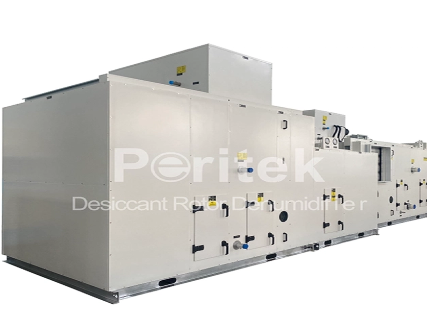
Desiccant dehumidifiers come in two main categories:
Passive Desiccant Systems:
Often found in consumer-grade products or moisture-control packaging, these require no power source. They slowly absorb moisture and must be replaced or regenerated manually.
Active Desiccant Systems:
These are industrial-grade units that actively regenerate the desiccant material using heat. They are ideal for commercial, industrial, and specialty applications requiring continuous operation.
Desiccant systems offer a variety of unique advantages:
Effective in Low Temperatures
Traditional refrigerant dehumidifiers lose efficiency below 15°C (59°F). Desiccant units, by contrast, thrive in cold environments.
Lower Dew Point Capability
These units can reduce humidity to much lower levels, critical in industries like pharmaceuticals, food storage, and electronics manufacturing.
No Risk of Freezing
Because there's no condensation involved, there's no risk of coils freezing over—common with refrigerant-based units.
Compact and Portable Options
Modern desiccant dehumidifiers are available in compact, portable designs for field operations, construction sites, or mobile labs.
Desiccant technology is widely used across many sectors, including:
Pharmaceutical Manufacturing
Maintaining strict humidity control during production and packaging is essential to drug efficacy and safety.
Food Processing & Storage
Dry environments help prevent mold, spoilage, and microbial growth, especially in dry ingredient handling.
Battery Production Facilities
Lithium-ion battery components are sensitive to moisture. A dry room with desiccant systems is vital to maintain quality and safety.
Cold Storage & Freezers
Ice formation on walls and evaporators is minimized, reducing defrosting needs and energy consumption.
Military and Aerospace
Desiccant systems protect sensitive electronics and weapon systems from corrosion and humidity-related degradation.
While active desiccant dehumidifier systems do require energy input, particularly for the regeneration phase where heat is applied to dry the desiccant material, their overall energy efficiency can be highly advantageous when evaluated from a lifecycle perspective.
The regeneration process is indeed energy-intensive, as the desiccant material absorbs moisture and must be heated to release that moisture and restore its drying capability. However, this upfront energy investment often leads to significant long-term energy savings and operational benefits in various ways:
Reduced Downtime: By maintaining optimal humidity levels, desiccant dehumidifiers help prevent moisture-related production issues such as equipment corrosion, material spoilage, or quality defects. This reduces unplanned downtime for maintenance or product recalls, leading to higher operational efficiency and lower indirect energy costs associated with restarting or reprocessing.
Increased Product Quality and Shelf Life: Maintaining strict humidity control reduces degradation and contamination risks for moisture-sensitive products. Improved product quality means fewer batches discarded or reworked, effectively reducing wasted energy and resources used in manufacturing, transportation, and storage. Longer shelf life also minimizes spoilage losses during distribution, further conserving energy embedded in the supply chain.
Lower HVAC Load in Controlled Environments: Desiccant dehumidifiers can significantly reduce the latent load on HVAC systems by removing moisture efficiently before the air reaches cooling coils. This means cooling systems don’t have to work as hard to condense and remove moisture, resulting in lower overall electricity consumption. Especially in pharmaceutical cleanrooms or food processing plants, integrating desiccant dehumidification reduces the size and energy demand of air conditioning equipment, delivering both capital and operating cost savings.
Advanced Regeneration Technologies: Recent innovations in desiccant systems focus on improving energy efficiency through intelligent regeneration methods. For instance, some units utilize waste heat recovery, capturing and recycling thermal energy from industrial processes or HVAC exhaust streams to regenerate the desiccant without additional fuel consumption. This reuse of heat dramatically reduces the net energy input required.
Solar-Assisted Regeneration: In regions with abundant sunlight, solar thermal energy can be harnessed to regenerate desiccant materials. Solar-assisted regeneration systems reduce dependency on conventional energy sources, cutting greenhouse gas emissions and operational costs, while promoting sustainable manufacturing practices.
Variable Speed Controls and Smart Monitoring: Modern desiccant dehumidifiers often come equipped with sensors and variable speed drives that adjust airflow and regeneration cycles based on real-time humidity levels. This adaptive control minimizes unnecessary energy consumption during periods of lower moisture load, optimizing overall system efficiency.
In summary, while desiccant dehumidifiers consume energy for regeneration, their design and operational advantages often lead to net energy savings when integrated thoughtfully. By improving product quality, reducing HVAC energy loads, and leveraging advanced regeneration techniques, these systems contribute to more sustainable and cost-effective humidity control solutions in demanding industrial environments.
When selecting a desiccant dehumidifier, consider the following:
Required humidity levels
Ambient operating temperature
Airflow and capacity needs (CFM or m³/h)
Portability vs. permanent installation
Energy source availability (electric, gas, or hybrid)
Working with an experienced manufacturer ensures your unit is properly sized and tailored for your specific environment.
Desiccant dehumidifiers are powerful tools for controlling humidity in environments where refrigerant systems fall short. Their ability to operate efficiently in low temperatures, handle high moisture loads, and maintain strict humidity levels makes them indispensable in many critical industries.
If you’re exploring reliable, high-performance desiccant dehumidification solutions tailored to your industrial or commercial needs, it’s worth learning more about Hangzhou Peritech Dehumidifying Equipment Co., Ltd. With years of expertise in moisture control technology and a reputation for custom-engineered systems, they’re a valuable resource for navigating your humidity challenges.


