
English
Views: 0 Author: Site Editor Publish Time: 2026-08-01 Origin: Site


Ambient moisture represents an invisible but constant challenge in modern confectionery manufacturing. It acts as a direct threat to product yield, surface texture, and extended shelf life. Seasonal weather shifts regularly introduce massive humidity spikes into production environments. Internal process moisture also builds up rapidly from hot syrups and washdown procedures. Standard commercial HVAC systems frequently struggle to handle these demanding conditions. They simply cannot remove enough moisture efficiently without overcooling the space. This failure forces automated production lines to slow down or halt completely. You need specialized mechanical equipment to regain absolute environmental control. Deploying a commercial food industry dehumidifier serves as the standard engineering response. It helps you eliminate critical production bottlenecks and drastically reduce daily scrap rates. Facility managers rely on these advanced systems to stabilize sensitive cooling processes. You will learn exactly how ambient moisture impacts your business profitability. We will explore high-risk production stages and evaluate modern drying technologies. You will also discover how to measure the real return on your equipment investment.
Many manufacturers mistakenly view humidity merely as a basic chemistry problem. We must shift this focus immediately toward operational and financial impacts. Poor moisture management directly drains your factory profitability every single shift. It ruins expensive raw materials and stalls high-speed automated lines. Let us examine the true business cost of ignoring environmental factors.
First, consider the severe financial impact of sugar bloom and product rejection. Condensation naturally forms whenever warm, humid air meets a cool chocolate surface. This surface moisture actively draws internal sugar crystals to the exterior. The water eventually evaporates into the air. It leaves ugly, grayish-white streaks of crystallized sugar behind. Retail customers reject these defective products immediately upon opening the wrapper. You end up wasting entire batches of premium cocoa and sugar. This aesthetic rejection destroys your profit margins and damages brand reputation.
Second, high humidity causes frustrating micro-stoppages throughout the packaging process. Hygroscopic ingredients actively absorb ambient moisture directly from the factory air. Sugar behaves exactly like a sponge in humid environments. Gummies, marshmallows, and hard candies quickly become incredibly sticky. They adhere stubbornly to silicone molds, plastic conveyor belts, and multi-head weighers. These jams force operators to halt the entire packaging line constantly. Constant mechanical bottlenecks severely throttle your overall daily factory output.
Finally, operational drag adds immense hidden labor costs to your ledger. Sticky sugary residue forces maintenance teams to perform frequent manual clean-downs. Extended drying times artificially reduce your maximum daily production volume. You pay line workers just to wait for products to cure properly. Implementing proper confectionery moisture control eliminates these costly delays entirely. It keeps your conveyor lines running continuously at their maximum rated speeds.
You must map your specific manufacturing process carefully to identify vulnerabilities. Specific high-risk stages dictate the final viability of your confectionery product. Environmental conditions in these distinct zones will either make or break your yield. Effective candy production humidity control targets these vulnerable locations directly. Identifying these zones helps engineers apply localized drying exactly where needed.
Cooling tunnels present the most severe condensation risk in any chocolate factory. Chocolates enter these enclosed zones to solidify rapidly before final packaging. Severe quality problems arise if the ambient dew point exceeds the internal cooling temperature. Moisture forms directly on the cold chocolate surfaces within seconds. This rapid condensation ruins the glossy product finish instantly. You must maintain ultra-low dew points inside these tunnels continually. Conventional air conditioning simply cannot achieve these aggressively dry conditions safely.
Coating processes rely heavily on precise atmospheric conditions for structural integrity. Dragees, chewing gums, and chocolate-coated nuts require careful layered crystallization. Dry air actively accelerates the hardening phase of sugar and chocolate liquid coatings. It allows machine operators to apply subsequent layers much faster. Proper ambient air drying directly increases your overall batch turnover rates. You can produce significantly more volume per standard operating shift. Humid air simply leaves the outer coating soft, tacky, and prone to chipping.
Moisture problems often start long before actual candy processing even begins. Bulk ingredients travel rapidly through extensive pneumatic conveying systems. Granulated sugar and milk powders clump together easily in humid transport air. Pipe friction also generates slight heat which exacerbates the moisture problem. These hardened clumps block transfer pipes and silo discharge points completely. Material flow stops entirely, starving the downstream mixers. You must condition the transport air to prevent this damaging clumping. Dry air ensures smooth, continuous pneumatic transfer across the entire plant.
Plant managers must objectively compare primary dehumidification technologies before upgrading their facilities. The industrial food processing sector generally relies on two main equipment categories. Each system handles different environmental moisture loads and temperature profiles. You need to understand their core mechanical mechanisms to make an informed choice.
Condensation dehumidifiers utilize standard mechanical refrigerant cooling cycles. They cool the incoming air stream below its natural dew point.
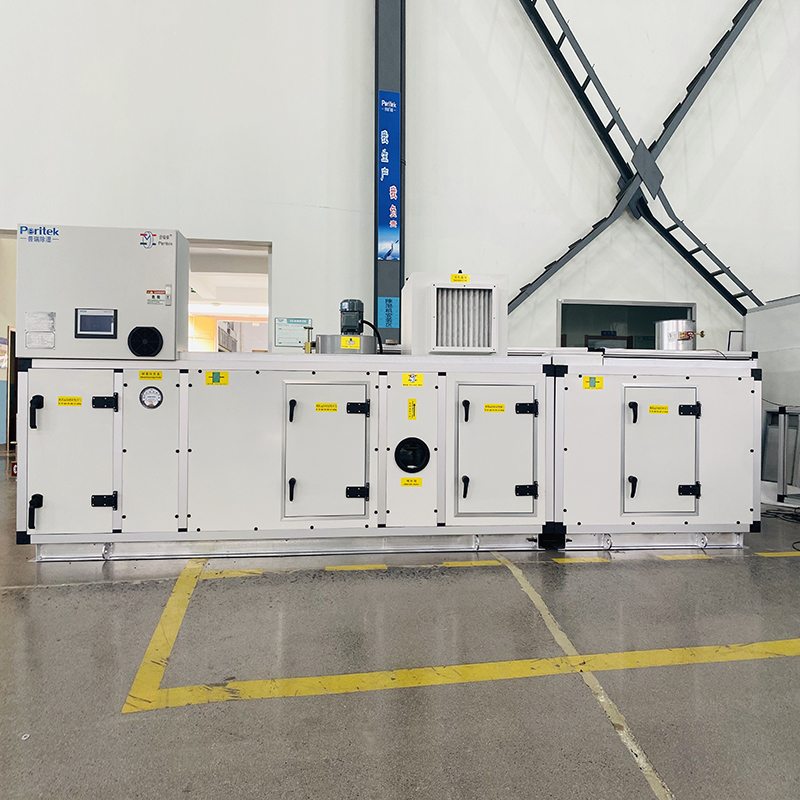
Desiccant technology offers a vastly superior alternative for professional candy makers.
The engineering verdict for modern confectioners strongly favors desiccant systems. A dedicated desiccant dehumidifier for food serves as the undisputed industry standard. It easily achieves the extreme dryness required for premium chocolate and hard candy. Traditional refrigerant systems simply fail in these rigorous low-dew-point scenarios. They cannot remove enough water vapor to prevent sugar bloom. Relying on advanced desiccant technology guarantees consistent, weather-independent manufacturing results.
Dehumidifier Technology Comparison for Confectionery Applications
| Technology Type | Ideal Operating Environment | Moisture Removal Method | Suitability for Confectionery |
|---|---|---|---|
| Condensation (Refrigerant) | High Heat, High Humidity | Cooling air to extract liquid water | Poor (Fails at low dew points) |
| Desiccant Rotor | Cool Temperatures, Deep Drying | Physical adsorption via silica gel | Excellent (Industry standard) |
Selecting the right climate control equipment requires a strict technical evaluation framework. Plant managers must assess several critical dimensions before shortlisting any specific unit. A properly sized machine ensures long-term operational stability and product consistency. A poorly sized unit wastes capital and provides inadequate moisture protection.
First, you must calculate the exact latent moisture load of your facility. A commercial chocolate factory dehumidifier deals with multiple overlapping moisture sources simultaneously. Fresh makeup air from outside introduces significant seasonal humidity. Daily sanitation and washdown procedures leave residual water on floors and equipment. The candy product itself off-gasses internal moisture during the cooling phase. Factory workers breathing and sweating also contribute to the total room moisture. Engineers must quantify all these dynamic inputs to determine the required drying capacity. Accurate airflow volume (CFM) calculations prevent costly underperforming installations.
Next, you must prioritize hygiene and strict regulatory compliance. Food safety regulations like FDA and GMP mandate rigorous equipment design standards.
These specific features prevent dangerous bacterial growth inside the air handling system. They also easily withstand harsh chemical washdowns during routine sanitation shifts. Standard commercial units often corrode rapidly in these aggressive cleaning environments.
Finally, evaluate the available energy recovery and rotor reactivation options. The internal desiccant wheel requires constant heat to release trapped moisture outdoors. You can generally choose between gas, steam, and electric reactivation heating methods. Steam heating often provides the best efficiency if your plant already operates a boiler. Direct gas heating offers incredibly powerful performance for massive, high-capacity industrial systems. Electric reactivation works exceptionally well for smaller, localized point-of-use units. Choosing the correct heating method maximizes your daily operational energy efficiency.
Installing new industrial climate control equipment involves highly specific rollout hurdles. You must manage these complex implementation risks carefully to avoid production disruptions. Retrofitting large ductwork in tight, existing facility layouts often proves quite difficult. It requires precise spatial planning and custom sheet metal engineering. Temporary downtime during final mechanical integration can hurt your monthly production schedules. We strongly recommend installing bypass ducts to minimize these operational interruptions.
You must validate equipment performance effectively to prove the financial case. Establish strict baseline operational metrics before the physical installation begins. Measure your current average scrap percentage over a typical humid summer month. Record the exact average cooling time required per standard batch. Track the weekly frequency of automated packaging machine jams and blockages. These detailed baselines provide a clear, undeniable comparison point later. A correctly installed food drying dehumidifier should improve all these metrics drastically.
Realistic ROI expectations should focus purely on easily quantifiable daily outcomes. First, you eliminate weather-dependent production pauses entirely from your schedule. Summer humidity spikes will never dictate your manufacturing output again. Second, you reduce the massive daily energy burden on your standard HVAC. Desiccant systems eliminate the deeply wasteful overcooling and reheating cycle typical of older plants. Third, you will see a highly noticeable increase in conveyor line speeds. Products cure faster, flow smoothly, and package instantly without sticking. These concrete operational gains recover your initial capital investment very quickly. Avoid focusing purely on the upfront equipment price tags. The true financial value lies in unlocking previously lost factory capacity.
Humidity control is never an optional luxury for serious commercial confectioners. It stands firmly as a fundamental engineering requirement for scalable, profitable production. Consistent product quality demands absolute command over your internal manufacturing environment. Variations in ambient moisture will eventually destroy your profit margins and brand reputation.
We advise readers to audit their specific facility layouts carefully today. Identify your primary production bottleneck areas before requesting formal equipment sizing. Determine whether coating, panning, packaging, or cooling causes the most costly delays. This focused analytical approach ensures you target the most profitable problems first.
Take proactive steps to protect your product quality and facility throughput. Encourage your team to consult with an experienced application engineer immediately. Ask them to perform a comprehensive, on-site facility moisture load calculation. Professional engineering analysis guarantees you select the perfect dehumidification system for your unique manufacturing needs.
A: Standard air conditioning only controls sensible temperature, not absolute humidity. Traditional AC systems cannot remove enough moisture to reach safely low dew points. Candies are highly hygroscopic and will absorb residual moisture directly from the air. You need a dedicated desiccant dehumidifier to maintain the extreme atmospheric dryness required for smooth packaging.
A: Industry benchmarks dictate strict environmental parameters for different plant zones. General packaging and processing areas typically require 40-50% relative humidity (RH). However, cooling tunnels demand much stricter control to prevent surface defects. They rely on absolute dew point temperatures to prevent condensation on cold chocolate surfaces. Desiccant systems maintain these critical sub-dew-point conditions efficiently.
A: Facility-wide space drying is possible but it often proves highly inefficient. Different manufacturing stages require vastly different ambient moisture levels. Cooling tunnels need extreme dryness, while general raw material storage needs moderate control. Localized, point-of-process dehumidification usually provides much better results. It delivers precise, tailored air quality directly to the specific machine requiring it.


