
English
Views: 0 Author: Site Editor Publish Time: 2025-06-16 Origin: Site


Maintaining optimal humidity levels is crucial across many industries and environments. From preserving sensitive electronic components to protecting pharmaceutical products and ensuring comfort in cold storage facilities, controlling moisture effectively can prevent costly damage, reduce health risks, and improve operational efficiency. While refrigerant-based dehumidifiers have long been popular, they often struggle in colder environments. This is where desiccant dehumidification technology shines.
Before diving into desiccant technology, it’s helpful to grasp the basics of humidity control. Humidity refers to the amount of water vapor present in the air, usually expressed as relative humidity (RH)—a percentage of the maximum water vapor air can hold at a given temperature.
When humidity is too high, it can cause mold growth, corrosion, product degradation, and discomfort. Dehumidifiers remove excess moisture from the air to maintain safe and comfortable levels.
Most common dehumidifiers use refrigeration technology. They cool air below its dew point, causing moisture to condense on cold coils and drip into a collection tray. While effective in warm, humid environments, these units have drawbacks:
Reduced Efficiency in Cold Temperatures: When ambient air temperatures drop below roughly 15°C (59°F), cooling coils risk freezing, limiting performance and requiring defrost cycles.
Limited Low Dew Point Performance: Refrigerant dehumidifiers typically cannot achieve very low humidity levels, which some industries demand.
These limitations open the door for alternative solutions—namely, desiccant dehumidification.
Desiccant dehumidification involves materials called desiccants, substances that have a high affinity for moisture and can absorb or adsorb water vapor directly from the air.
Common desiccants include silica gel, activated alumina, and molecular sieves. These materials can remove moisture regardless of air temperature, making them ideal for low-temperature applications.
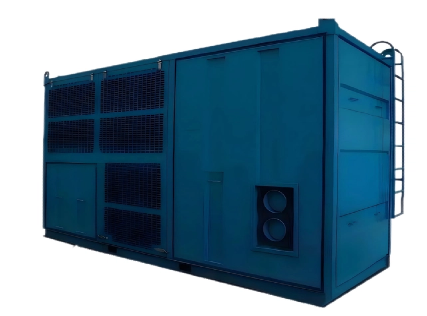
At the heart of a desiccant dehumidifier is a rotating wheel or rotor coated with desiccant material. The process works as follows:
Adsorption Phase: Moist air passes through the desiccant rotor. The desiccant adsorbs water vapor from the air, drying it.
Regeneration Phase: The rotor continuously rotates. The section of the rotor saturated with moisture passes through a regeneration zone where heated air flows, removing moisture from the desiccant. This “reactivates” the desiccant to absorb moisture again.
This cycle is continuous, allowing steady dehumidification without the freezing issues that refrigerant systems face.
No Reliance on Cooling: Since the drying process depends on adsorption, not condensation, desiccant dehumidifiers don’t require air to be cooled below the dew point, eliminating coil freezing risks.
Consistent Performance: Desiccant materials maintain high moisture removal rates even in cold, dry conditions, which is critical for industries operating in refrigerated warehouses or cold climates.
Lower Operating Humidity Levels: Desiccant systems can reduce relative humidity to levels as low as 5–10%, far below what refrigerant dehumidifiers can achieve.
Improved Air Quality: Because desiccants absorb moisture directly, they help maintain stable humidity without introducing cold drafts or temperature fluctuations.
While desiccant dehumidifiers require energy to regenerate the desiccant material—usually through heating—modern designs focus on energy savings:
Waste Heat Recovery: Some systems reuse heat generated by other processes or from the exhaust air to regenerate the desiccant, minimizing additional energy consumption.
Solar-Assisted Regeneration: Innovations incorporate solar thermal energy to reduce reliance on electric or gas heaters.
Variable Speed Fans and Controls: Advanced controls optimize airflow and heating based on real-time humidity needs, improving efficiency.
Despite the energy input for regeneration, desiccant dehumidifiers often provide cost savings by preventing product spoilage, reducing downtime, and minimizing HVAC load.
Desiccant dehumidifiers play a crucial role in many industries where precise humidity control is not just beneficial but absolutely necessary. Their ability to maintain very low moisture levels even under challenging temperature conditions makes them indispensable in the following applications:
In cold storage facilities and food processing plants, controlling moisture is essential to prevent frost buildup and condensation, which can compromise both equipment and product quality. Desiccant dehumidifiers reduce the relative humidity inside refrigerated environments without significantly affecting the temperature, helping to:
Prevent frost formation on cooling coils, walls, and floors, which can reduce energy efficiency and increase maintenance needs.
Minimize surface condensation on packaging and products, reducing microbial growth and spoilage risks.
Extend the shelf life of perishable foods such as meats, dairy, and fresh produce by maintaining an environment that slows down enzymatic and bacterial activity.
Improve air circulation and reduce sticky or damp conditions that could affect worker comfort and hygiene standards.
The use of desiccant technology in cold storage ensures consistent product quality while optimizing refrigeration system performance.
Pharmaceutical production demands rigorous environmental control to comply with Good Manufacturing Practice (GMP) regulations and other industry standards. Desiccant dehumidifiers are critical in:
Maintaining ultra-low humidity levels in cleanrooms, preventing moisture-related degradation of sensitive Active Pharmaceutical Ingredients (APIs).
Reducing the risk of microbial contamination by controlling moisture that supports bacterial and fungal growth.
Protecting precision instruments and equipment from corrosion and malfunction caused by humidity fluctuations.
Enhancing process stability in manufacturing steps such as granulation, coating, and tablet pressing, where excess moisture can cause defects or product inconsistency.
By ensuring precise humidity control, desiccant dehumidifiers help pharmaceutical companies produce safe, effective medicines while minimizing product loss and costly recalls.
The electronics industry faces constant challenges with moisture, which can cause corrosion, short circuits, and permanent damage to delicate components. Desiccant dehumidifiers contribute significantly by:
Maintaining extremely low relative humidity levels in assembly lines and storage rooms, reducing the risk of moisture-induced defects.
Protecting printed circuit boards (PCBs), semiconductors, and other sensitive parts during soldering, testing, and packaging processes.
Enhancing the reliability and lifespan of electronic devices by preventing moisture-related failures.
Supporting cleanroom environments where particulate and moisture control are both critical.
For manufacturers of consumer electronics, aerospace components, and medical devices, desiccant dehumidification ensures high product yields and quality assurance.
Preserving valuable cultural artifacts, historical documents, and rare artworks requires environments with tightly controlled humidity levels. Excess moisture can lead to mold growth, paper degradation, metal corrosion, and irreversible damage to priceless collections. Desiccant dehumidifiers help by:
Maintaining stable, low humidity in display cases, storage rooms, and climate-controlled vaults, especially in cooler environments where moisture condensation is common.
Protecting delicate materials such as old manuscripts, paintings, textiles, and archaeological finds from moisture-induced deterioration.
Enabling institutions to meet preservation standards and extend the longevity of their collections.
Reducing the need for chemical treatments or frequent restoration efforts caused by environmental damage.
By providing precise and reliable humidity control, desiccant dehumidifiers become indispensable tools in safeguarding cultural heritage for future generations.
Selecting an appropriate desiccant dehumidifier depends on factors such as:
Required humidity reduction
Air volume and flow rates
Ambient temperature and humidity
Energy source availability
Application-specific standards and certifications
Partnering with an experienced manufacturer can help tailor solutions for optimal performance and efficiency.
Desiccant dehumidification represents a powerful, efficient, and reliable method for moisture control, particularly in low-temperature environments where traditional refrigerant dehumidifiers falter. Understanding the science behind their operation clarifies why they are the preferred choice for many critical industrial and commercial applications.
For those interested in exploring advanced desiccant dehumidification technology or finding customized solutions for challenging humidity control needs, Hangzhou Peritech Dehumidifying Equipment Co., Ltd. offers a wealth of expertise and a broad portfolio of systems designed to meet diverse industrial requirements.
You can learn more about their technologies and capabilities by visiting their website or reaching out directly for consultation.


